Manzanita Lake

Technical Fishing On Manzanita Lake

It’s been over five years since I last fished Manzanita Lake and I was itching to get back out to one of the most beautiful trout lakes in California. This trip was planned as a family camping trip so I had to play around finding time to get out on the lake. I was able to get about 8 hours of fishing in and every hour spent was filled with both frustration and excitement.

Manzanita Lake can be a difficult lake to figure out; fish can be seen rising all day and you have to have exactly what they’re looking for plus an accurate and subtle presentation or else they’ll ignore you. There are times when the fish are aggressive, hungry, and willing to chase making the fishing relatively easy but more often than not they are spooky and selective.
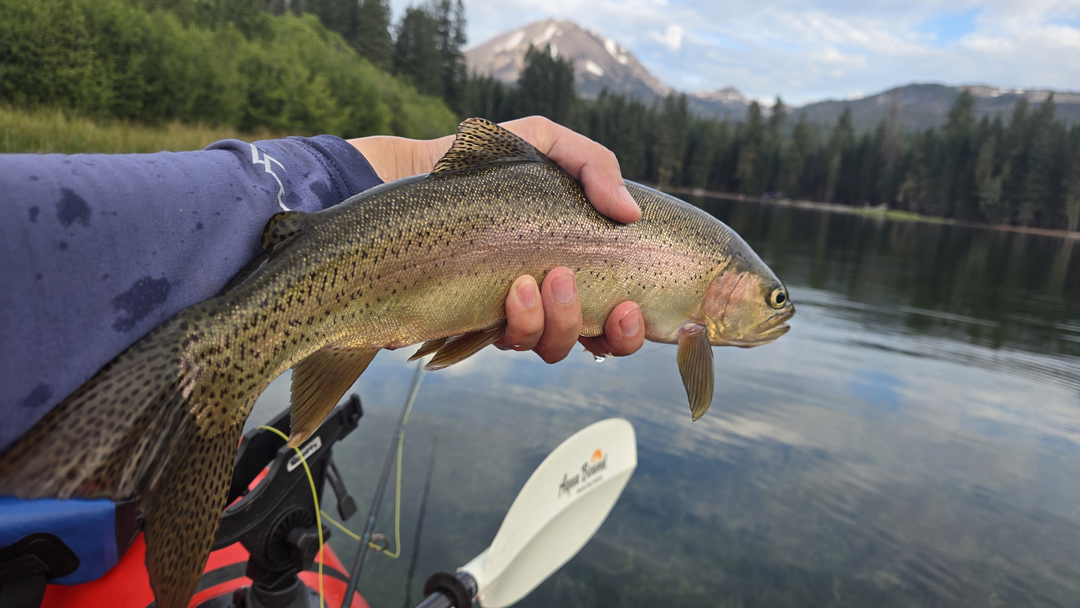
My starting presentation when fly fishing a lake is always a pleasant tail nymph and zebra midge under an indicator. These two patterns imitate callibeatis and chironomids which are two of the most common insects in stillwater fisheries. On Manzanita Lake the height of the weed beds can vary throughout the year therefore adjusting your indicator so that your flies are about a foot above them is absolutely critical. There are a lot of fish in the lake and they cruise around all day looking for an easy meal. I found that when using an indicator as long as you are patient you will get bit at some point. During this trip nymphing seemed to work best around mid-morning to afternoon. I didn’t have a lot of time to fish during this time period but I managed to land 2 out of 5 fish when I was out on the water. The 3 fish that I lost broke me off in the weed beds which is something I’ve ever experienced out there before. This visit was more about the quality of the fish rather than the quantity as I caught some of the biggest fish I’ve ever caught out there with the average being about 16″.

From what I observed stripping in streamers was the most popular technique used out on the lake. I only saw one fish hooked stripping streamers and although I tried it a bit for myself it didn’t seem to be what the fish were wanting.
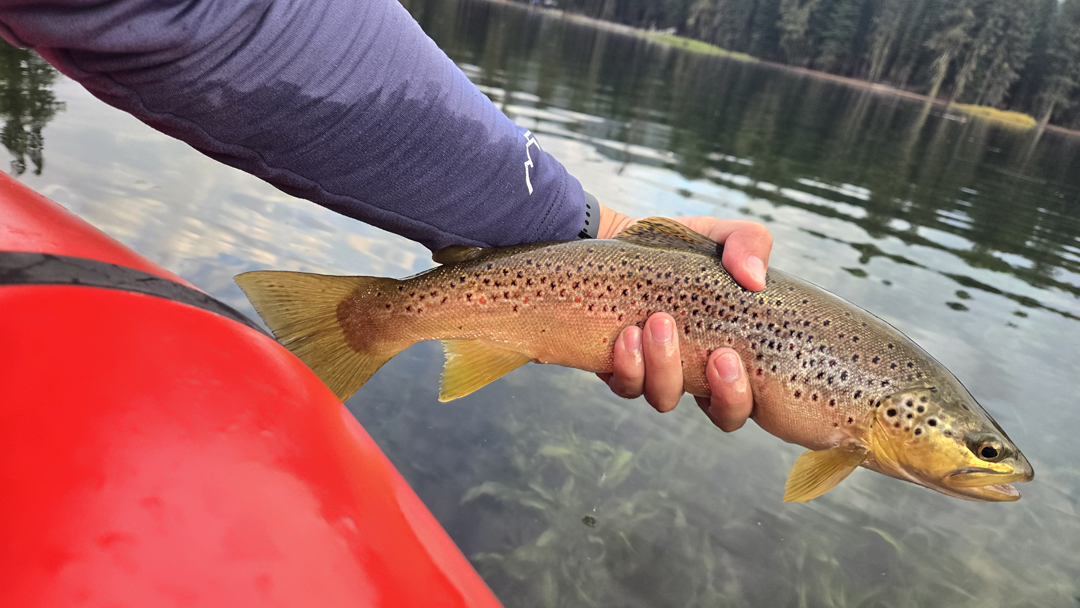
The evening views are magical out on Manzanita Lake but the fishing can be extremely difficult. The first evening I was able to get out at around 7pm and was lucky enough to be fishing a glassy lake. It was amazing to see the amount of fish rising all over the lake. Dry fly fishing a lake is a completely different ballgame compared to a stream and I try not waste too much time chasing after the sporadic risers as it’s difficult to pinpoint which direction they’re swimming. I need a target or at least an area where fish are concentrated to feel confident enough to tie on a dry fly. Thankfully this evening I found a good spot near the inlet and started going to work trying to figure out what they were rising for. My initial thought were duns as I saw a few callibeatis pop up here and there but no dice. I figured if they didn’t want the dun they would want the emerger as I saw several shucks just below the film of the water. I tied on a size 16 Quigley cripple and with a couple of good casts and a bit of gentle twitching I was able to rise 4 nice trout.

The following evening, I found fish rising all throughout the lake but not to extent of the previous night. The weather that day was overcast with on and off rain which may have hampered down the evening hatch. I was able to rise one smaller fish that broke me off in the weeds but other than that it was super tough fishing.

Although the fishing was pretty difficult this trip all the fish I caught on Manzanita Lake were exceptional. After doing a bit of research it seems like Manzanita Lake goes through cycles of medium 14″ fish and larger +16″ fish. It looks like the big ones were out this time around and I had a fantastic time catching them.
Manzanita Lake

Manzanita Lake Summer

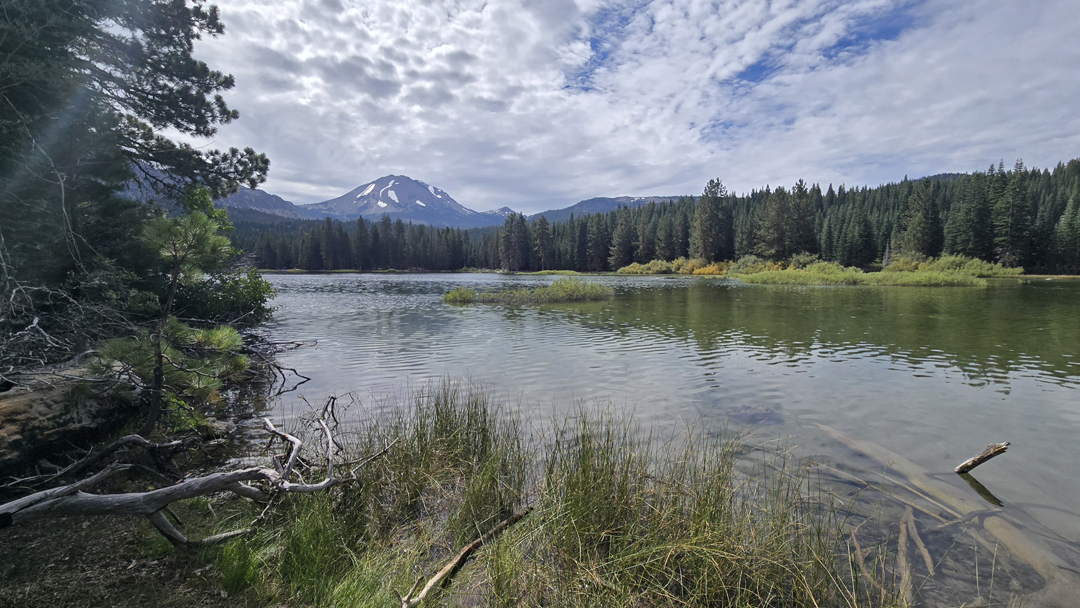
Manzanita Lake is one of the most beautiful lakes I’ve ever had the pleasure of fishing. The lake is full of wild brown and rainbow trout that cruise throughout the lake looking for food both above and below the surface. The ratio of browns to rainbows is pretty even with an average fish being about 12” – 16”. Manzanita Lake is one of the few lakes in California that hosts perfect conditions for a fantastic wild stillwater trout fishery and should be on every fly anglers list of places to visit and fish.

The last time I fished Manzanita Lake was back in June 2017. Most of Lassen Volcanic National Park was closed that year due to the heavy snowpack from the crazy storms in early winter that caused floods reminiscent of the massive floods in 1997-1998. The lake was in optimal condition as the water temperatures were still cool and the weather had just warmed enough to get the bugs hatching. Manzanita Lake was the first time I ever tried to fly fish for trout in stillwater conditions. I had the opportunity to fish the lake pretty hard that visit and had a lot of fun figuring things out while catching a few fish along the way.

This visit to Manzanita Lake was a bit different and not so much focused on fishing due to the addition of my 16 month old. I was able to get out and fish a bit in the evenings but aside from that most of the time spent was chasing down a toddler that wanted to play in dirt and climb on rocks. I planned our visit mid-week from Tuesday to Thursday to try to avoid the crowds and though there were still quite a few people out I’m sure our experience was nothing like it would have been closer to the weekend.

Lake conditions were significantly different this visit. The water was warmer and the underwater vegetation looked about twice as high as the previous time I fished it. I logged the water surface temperature at 73°F and marked an average of 3-4ft between the surface and the water vegetation. The wind picked up in the afternoon and was blowing a consistent +10MPH. The fish were surprisingly still active despite the warmer water temperature and heavy winds. As I scanned the lake every few seconds I could see fish jumping and rising. I kept my eye on the fly anglers out on the water and saw very few hookups. All of my instincts were telling me that this was going to be a tough visit.

I was able to get some fishing time on Manzanita Lake from 7pm to sunset. Although I wish I was able to fish Manzanita Lake in the morning, the evening was definitely the best other option. Mid-day seemed a bit too busy on the water with kayakers and canoers all throughout the lake. Swimmers were concentrated near the boat launch leaving the northern end of the lake quieter and less pressured.

Once I was finally able to get on the water I found the fish to be concentrated in the middle section of the lake near the iconic Mt. Lassen Manzanita photo spot. I observed fish rising throughout the evening and I managed to get two rises with my Manzanita go-to dry fly the Sheep Creek Special. I’m not quite sure what the Sheep Creek Special is imitating and I don’t think the trout know either but I do know they sure love eating it. I throat pumped the trout that was able to net and found mostly callibaetis nymph. Naturally I switched to a callibaetis nymph but the fish didn’t seem interested. Once the wind calmed and the water turned to glass the trout activity really started getting wild. Fish were rising all around me but I couldn’t see what they were eating. I kicked around saw a ton of different bugs on the surface mostly midges and what appeared to be a cream colored trico mayfly spinner in a size 22. I figured it had to be the spinner they were rising for and of course I didn’t have anything in my fly box that looked like it. I ended the first night 2/3 with one brown and one rainbow in the net.

The following day I was able to get an hour mid-day on Manzanita Lake. I started this session with a balanced damsel and callibaetis on an indicator. The afternoon wind was moving the water surface pretty good and I figured I’d have it work for me rather than try to fight it. After about 20 minutes with no grabs I switched to a Sheep Creek Special to see if I could get one of the many trout I saw jumping to rise. As I worked my way around the lake I noticed that the fish that were rising and jumping were chasing adult damselflies that were teasing them just above the surface. Knowing this I didn’t think the trout were going to interested in my dry flies so I ended this short session with no takes.

I went back out in the evening this time prepared with a few new dry flies, a size 18 PMD comparadun, that resembled the small cream trico that I saw the night before. I initially started out with a damsel nymph on a long leader and got two strikes with one bow into the net. As the sun started to set the wind died down the fish were eating on top again prompting me to switch to the small comparadun. I kept an eye out for targets and found a fish just below the surface sipping invisible bugs in a predictable direction. I cast about a foot in front of it and waited anxiously for it to suck it down. As it inched closer and closer to my fly I held my breath until I finally watched my fly disappear into the suction that was the fishes mouth. Fish on!

I managed to land one more fish that night going 3/4. Throat samples revealed a lot of different insects primarily callibaetis but mostly light green daphnia. The fish were rising all night despite little to no light and I suspect they were raking in daphnia since they didn’t need to see them to eat them.

I caught fish this trip but overall it was a bit slow. As always I learned a few new things and will need to add some new flies to my stillwater box.

1 2