Englebright Lake

Englebright Lake On The Troll

I’ve been working on trying to figure out how to properly troll from a boat for trout and so far all of my trips have only to Collins Lake. Prior to the Christmas storm that filled up Collins I felt like I was making progress but after the storm muddied up the lake it’s been extremely tough. Fishing guides and Collins Lake.com’s fishing report will tell you the fishing is great but anglers fishing from the shore and on boats will tell you otherwise. From my experience, fishing in low clarity water usually means you have to hit the fish on the nose in order to get a grab unless you’re fishing bait. It was no surprise to me that baiters were out fishing trollers out there in mud. I felt like I hit a wall, a $30 paywall with nothing to show for it. The skunk and slow fishing had me questioning whether I was doing something wrong or whether it was mother nature calling the shots.

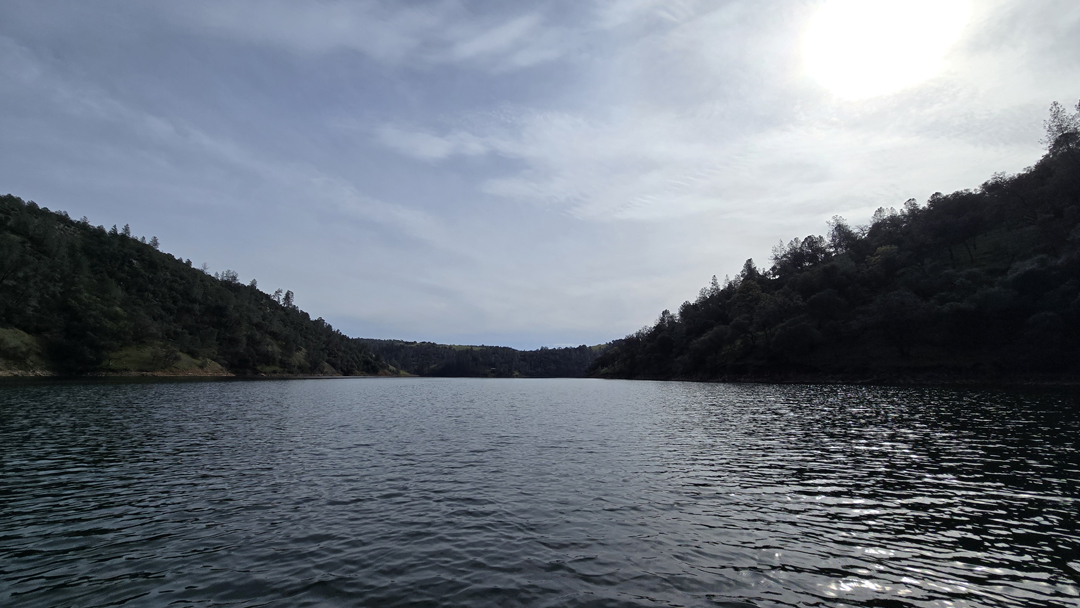
Englebright Lake is known to be a bit of a sleeper lake here in Northern California. Other lakes nearby such as New Bullards Bar, Collins Lake, Lake Oroville, and Scotts Lake Flat outshine it in many ways making it a less popular lake to spend time on. In my opinion the most limiting factor to Englebright Lake is its accessibility. Englebright is primarily a boater’s lake due to its limited shore access. The lake is also relatively narrow making it difficult for activities that need wide open spaces. Despite the problem of accessibility, one of Englebright Lake’s more unique features is the opportunity to camp at one of its many boat-in campsites between May and October. The day-use fee for Englebright Lake is $10 and can be paid at the toll booths near both boat launches.

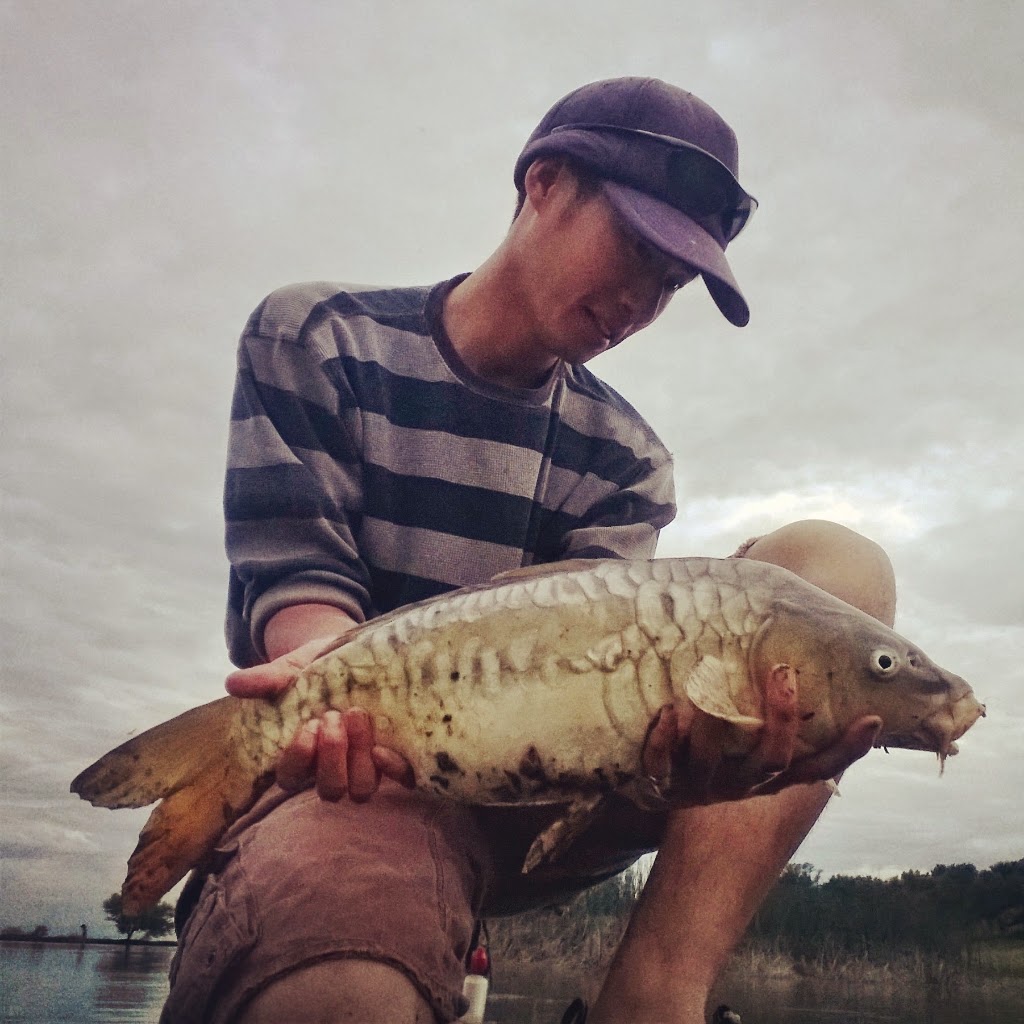
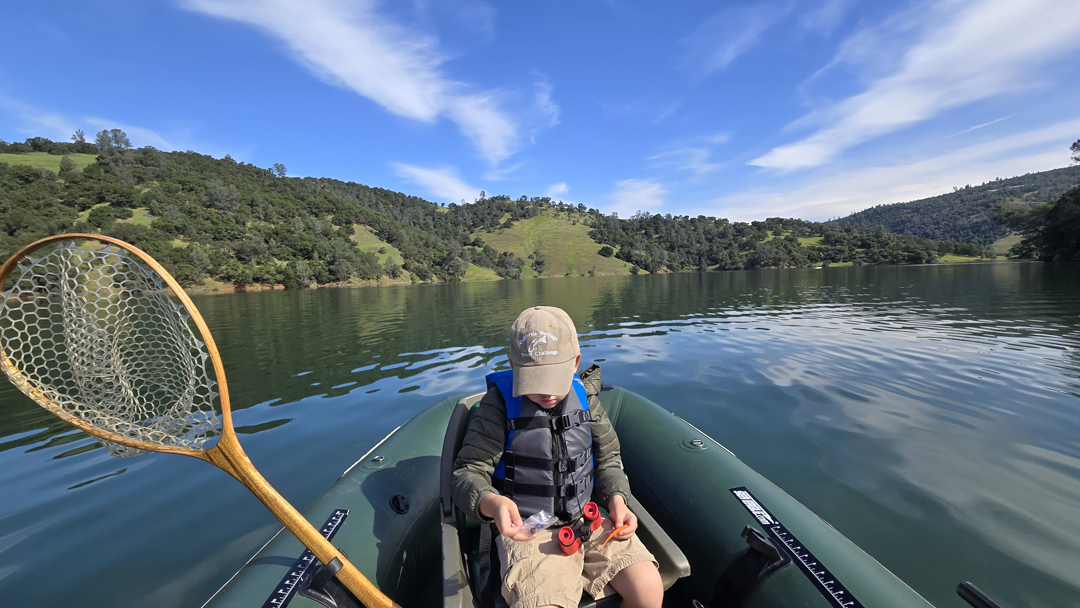
My son and I set out on Englebright Lake on a weekday to give the lake a try. I purchased an America The Beautiful pass which acts as an annual pass for Englebright (which is a federally managed lake) for $90. I saw a lot more value and potential in this annual pass versus Collins Lake’s $300 pass. We trolled for about 6 hours and only saw three or four boats throughout the day. The lake was full at 95%, a beautiful dark green with about 15ft of clarity, and the water surface temperature was 48 degrees. These conditions were a huge difference when compared to Collins Lake.

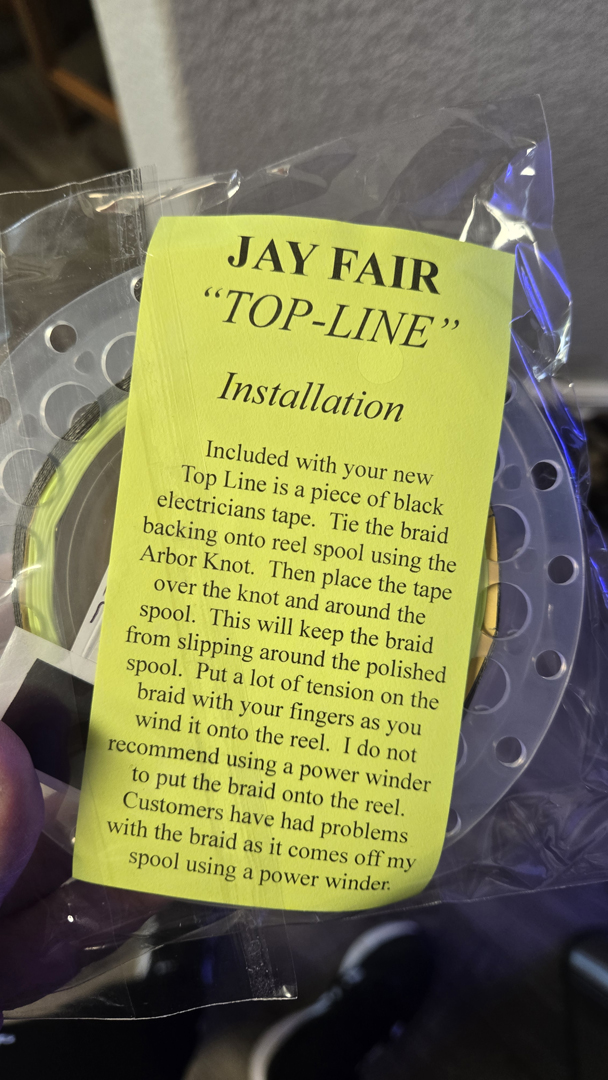
Throughout this journey I’ve been researching different methods of trolling and recently found the Jay Fair method. I’ve always known about Jay Fair and his legendary exploits on Eagle Lake but never really looked into his techniques. Jay Fair was a truly an innovative angler adopting many different techniques from all different styles of fishing. Jay Fair created what was essentially a sink-tip line that could fit on a conventional trolling reel by connecting 15ft of 18# leadcore to fly line. The fly line was floating running line that helped him and his clients see where the line was in the water. I thought this idea was absolutely genius. Instead of piecing the right lines together myself I bought a premade spool from trollingflies.com. I had previously tried Cal Kellog’s hybrid leadcore line, a great set-up, but found it a bit too bulky for my liking.

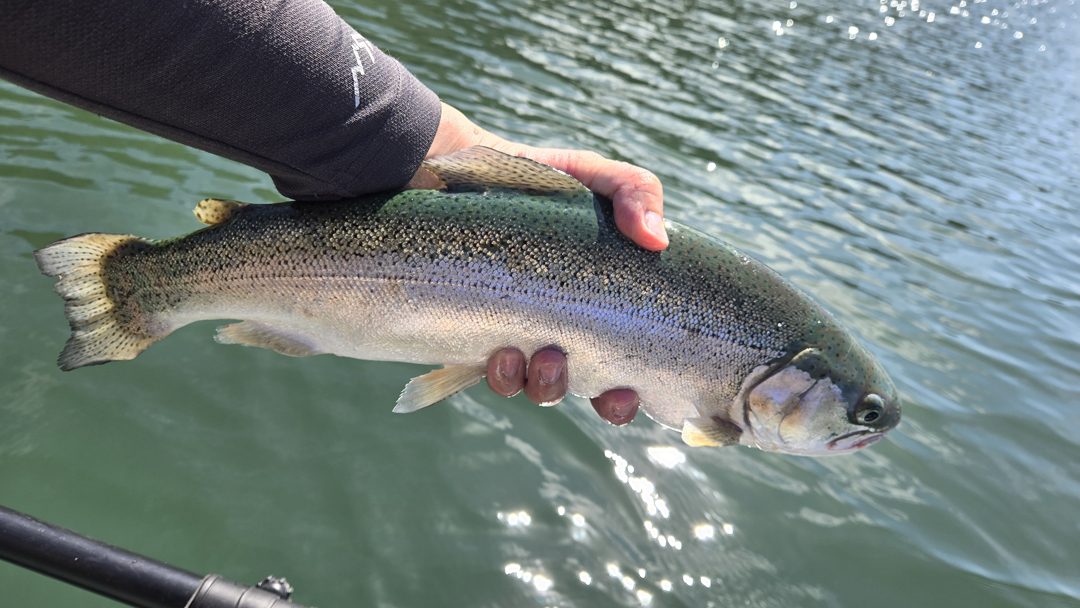
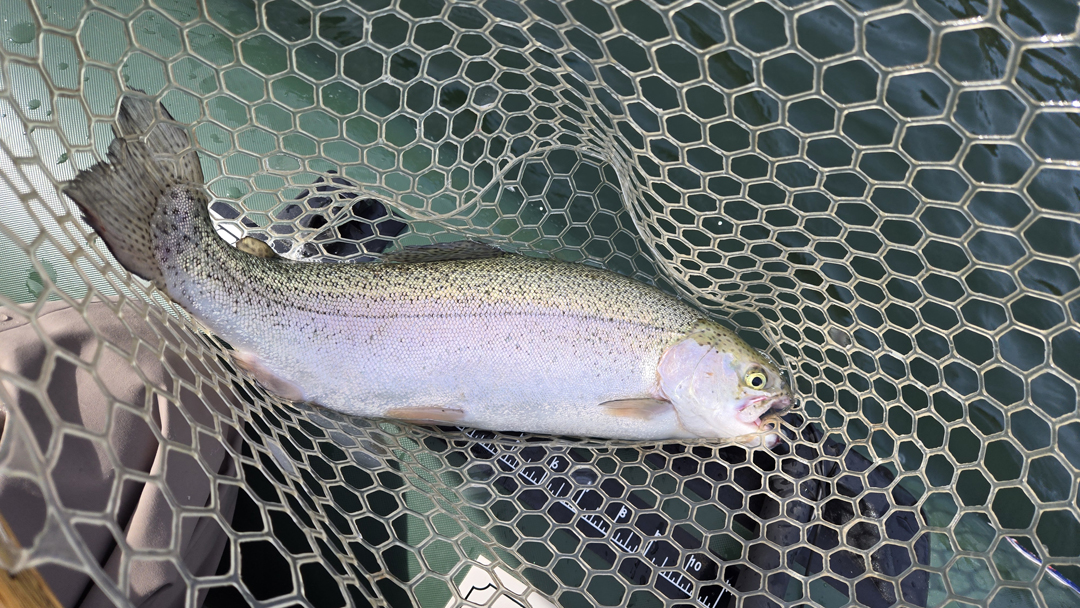
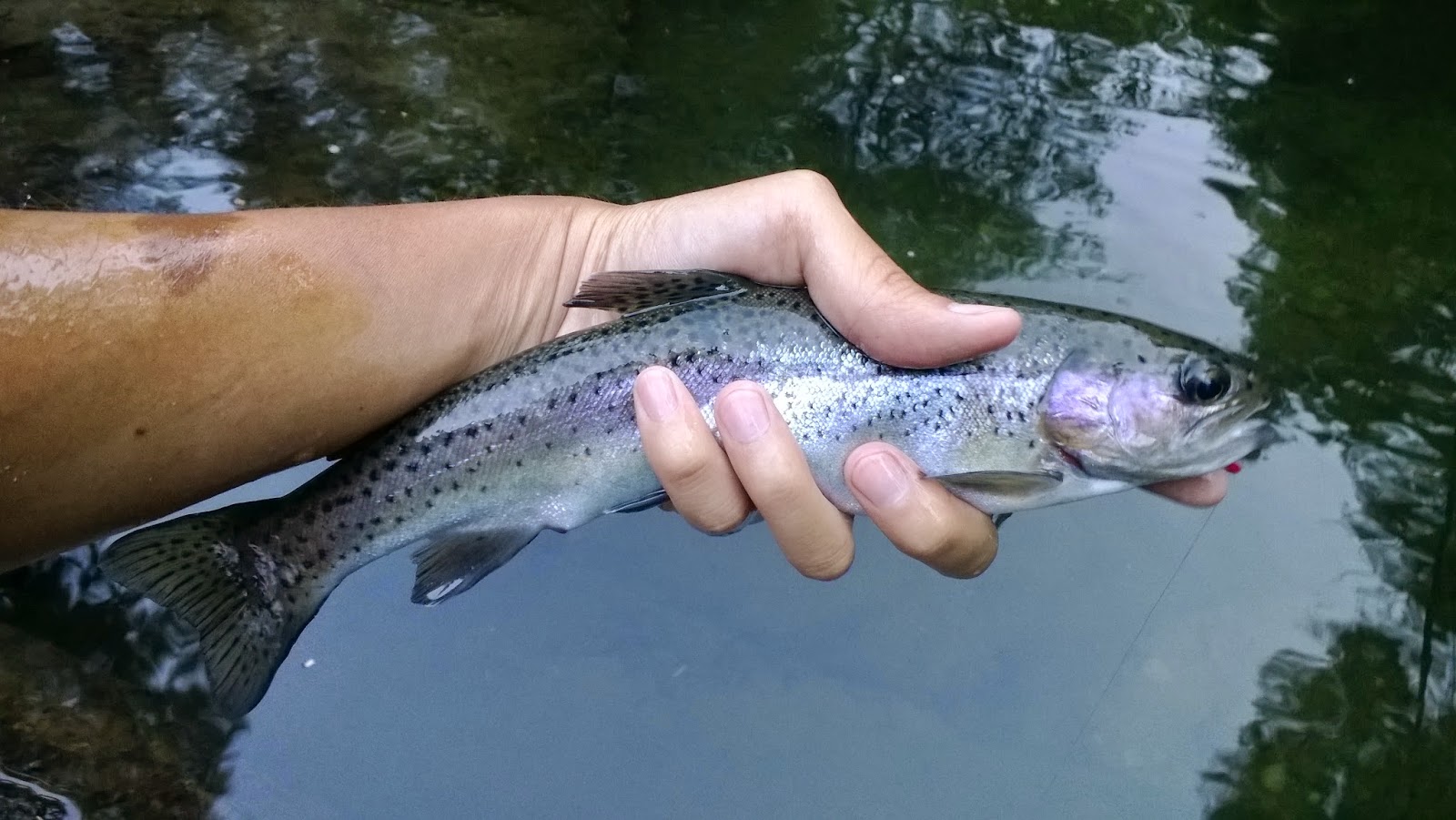
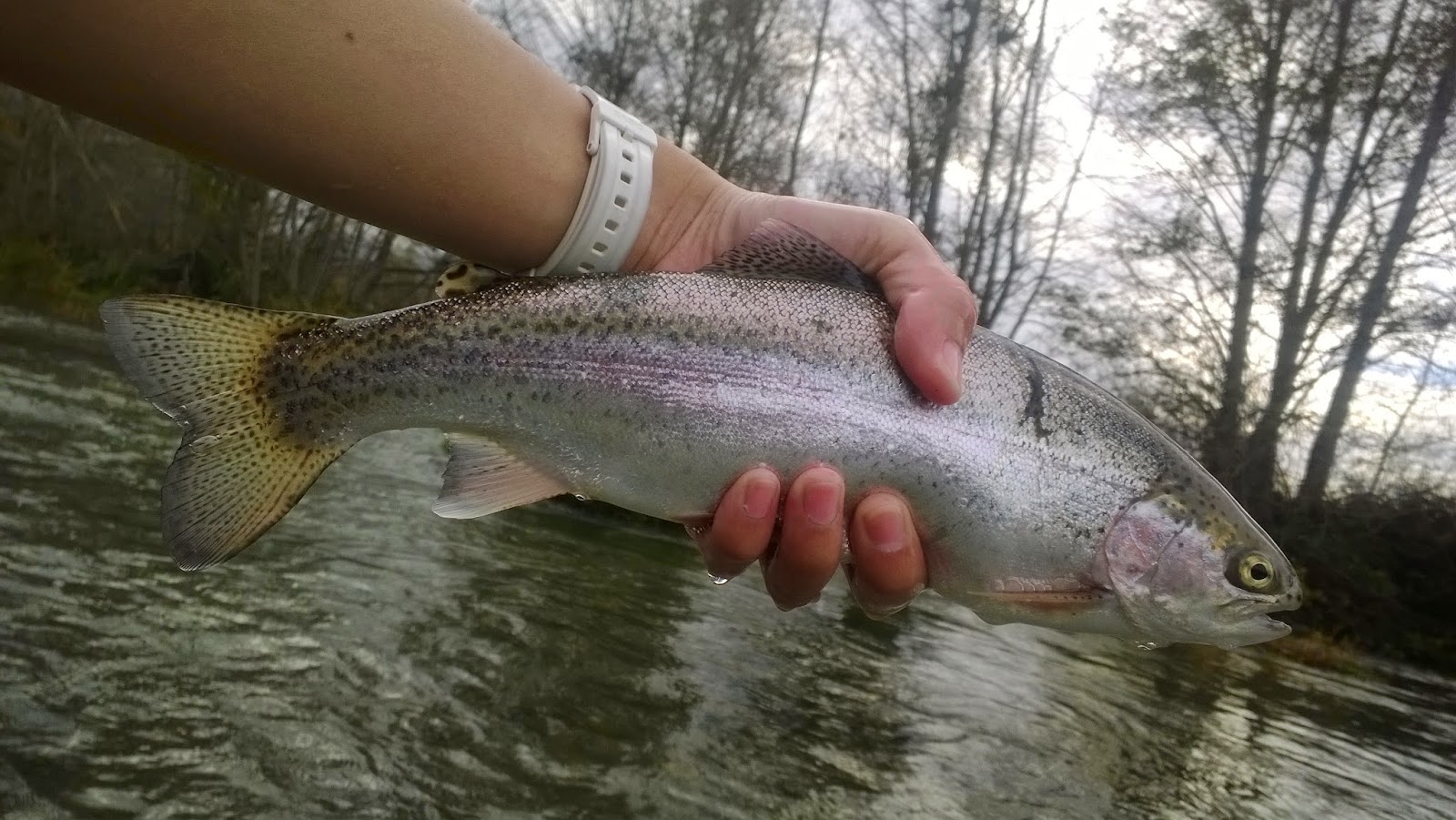
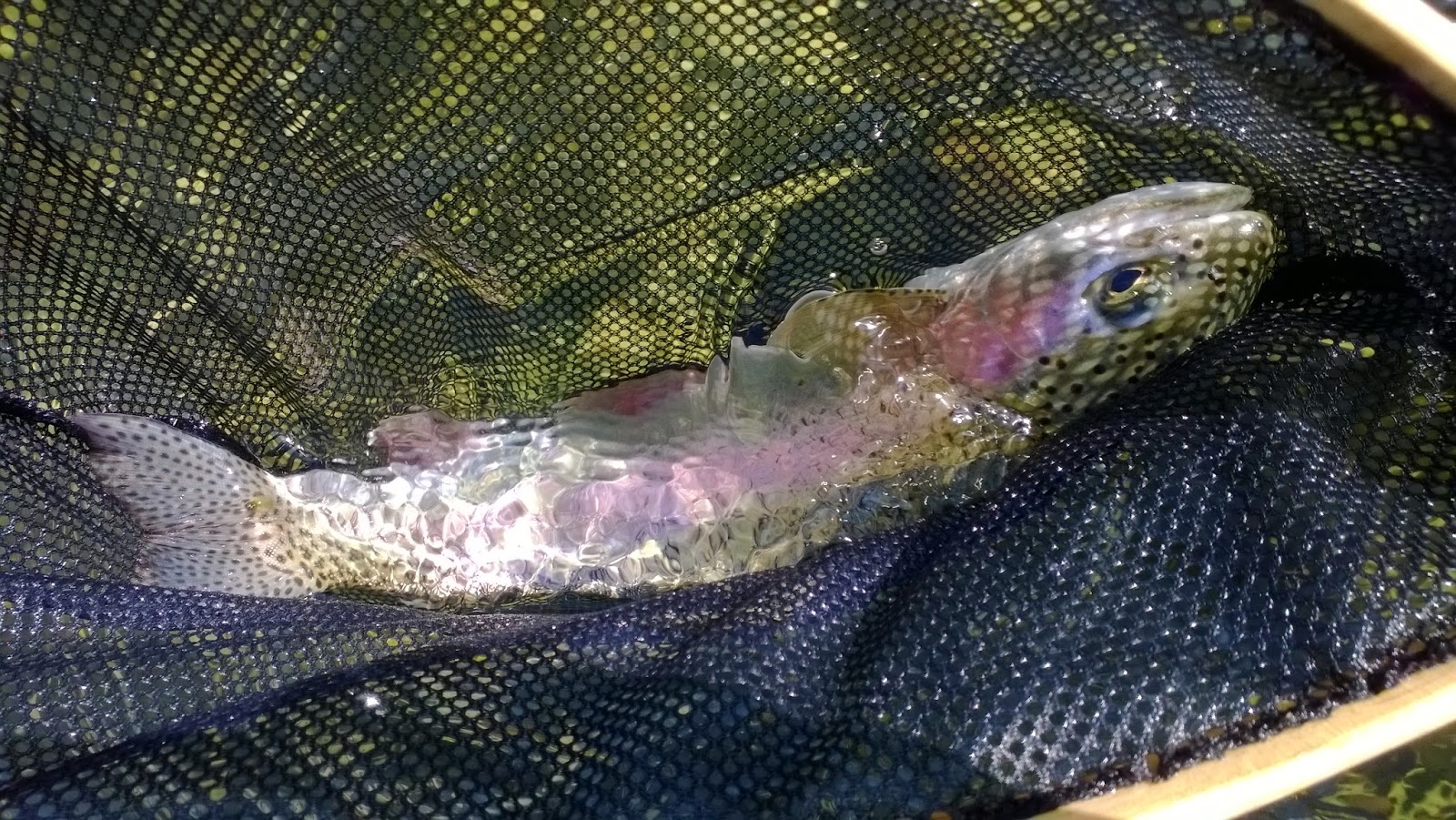
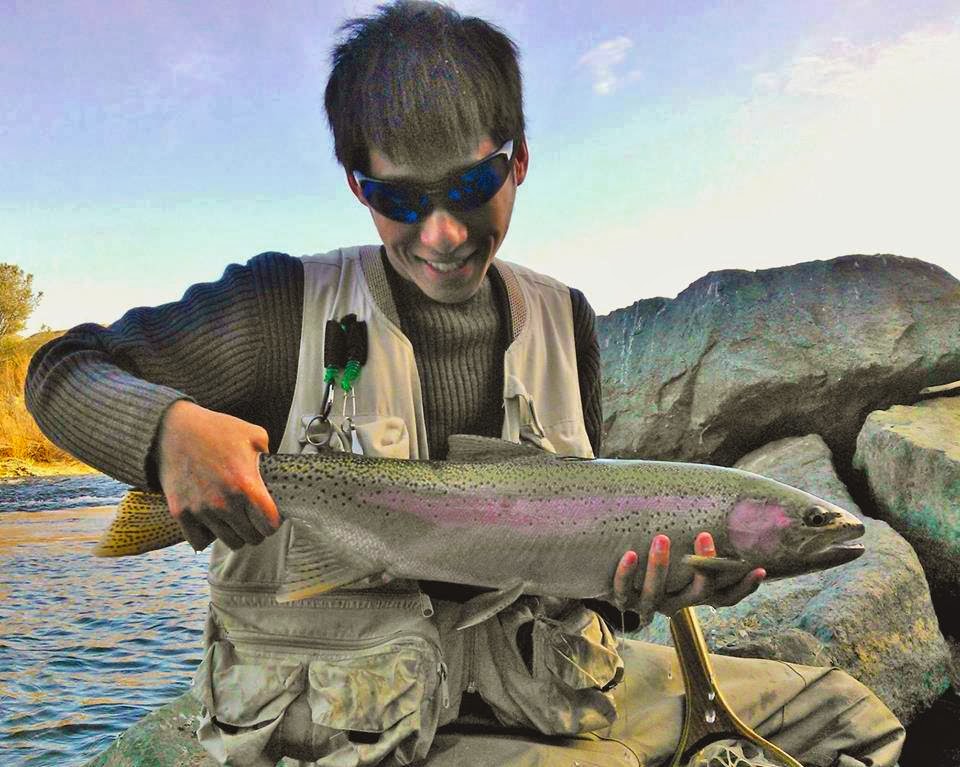
We started out the day by trolling past the dam to the cove across the lake. We trolled a pair of Jay Fair flies on the Jay Fair line and a trout trix worm on a downrigger set to about 6ft. All the information I gathered said that most people will usually start fishing once they get past the first bend heading up the lake. That information held true as we got our first fish not in the coves but about 50ft off the bank past the bend. The first fish took an orange Jay Fair fly. It wasn’t long until we got another grab on the Jay Fair fly this time on the olive. Flies seem to be the hot ticket this trip so I took off the trout trix and tied on a pair of buggers on the downrigger and we were getting grabs all morning until it slowed down in the afternoon. Most of the fish we caught were about 12-14″ with the fish of the day being about 2lbs and 18″. I tried several different lures throughout the day just to experiment but the fish weren’t having it. I also tried Jay Fair’s line jig where he draws a circle with the rod to impart action to the fly but the fish preferred no action this day. My son and I had a blast reeling in fish all day and it was nice to finally have some success on the boat.

Englebright Lake, Yuba River

Englebright Lake On The Fly

Englebright lake is one of the few lakes within 30 minutes drive of my location. I’ve fished it once in the past during the spring and actually managed to catch two fish, a rainbow trout and a spotted bass. I’ve been itching to get out onto some stillwater and decided to check out Lake Englebright again to see if I could get the winter float and fly technique to work for me.

Englebright Lake is a very steep lake that is typically kept full. There is no room for wading therefore a boat is the best method to fish this lake successfully. I was debating between using my float tube or kayak and ultimately chose the kayak again because the float tube would only be able to get me out so far. It would be too dangerous to kick all the way out to where I wanted to be and back within the time frame I wanted to fish. I also needed to find the fish and being limited to fishing between the two boat launches would be a waste of $5 parking.

It’s been awhile since I’ve used my Intex Challenger K1 inflatable kayak. The last time I used this kayak I had accidently put a hole in it while bringing it back the bank during my trip to Lake Crowley; needless to say I will definitely be more careful with this one. It took me about 30 minutes to completely rig up and though my confidence was a bit shaken from having my last kayak fail I quickly regained it all back once I was out on the water.

I brought my cheapo fish finder with me to try and help me find the correct fishing depth. Most of the time the ideal fly fishing depths between 10′ – 15′ were right off the bank. All the possible “fish” the finder mapped where way deep near the bottom. The water was also very clear and I estimated I could probably see about 10′ into the water. Although this helped me identify structure, weed beds, etc it most likely made the fish more spooky. It was going to be a tough day.

I initially worked the float and fly around a few steep drop offs hoping that I would find suspended spotted bass. After a few hours went by with no grabs I switched to a type 6 full sinking line stripping flies. Despite covering quite a bit of water neither of these techniques worked. Towards the end of the day I though perhaps trolling would be the best way to approach these slow winter fishing conditions. I figured with a full sinking line I could probably let out a bit of line and slowly troll around while enjoying some paddling.

I finally got my first grab while floating around one of the coves on the northern end however as soon as I went to set the hook the fish was already gone. Maybe having the fly rod between my legs wasn’t the best way to do this whole trolling thing. Unfortunately I didn’t get any grabs the rest of the day. I’m currently working on ideas on how to become more efficient and effective on the kayak the next time I return to Englebright Lake. I may wait until the spring to try again after reading that the big pen grown rainbows that the marina raises are released during that time. The one good thing about fishing from a kayak is that even if you don’t catch a single fish the paddling and floating is always fun.

I fished the Yuba before the hurricane storm and found a bunch of nice fish in a run that I’ve never fished before. Hopefully we get some much needed rain and snow within the next few days.

1 2